
PERSONALIZED REGENERATIVE & FUNCTIONAL RECOVERY
When the injury was treated, but repair, remodeling, or functional recovery remain insufficient.
1 PROTOCOL · 1 PATIENT
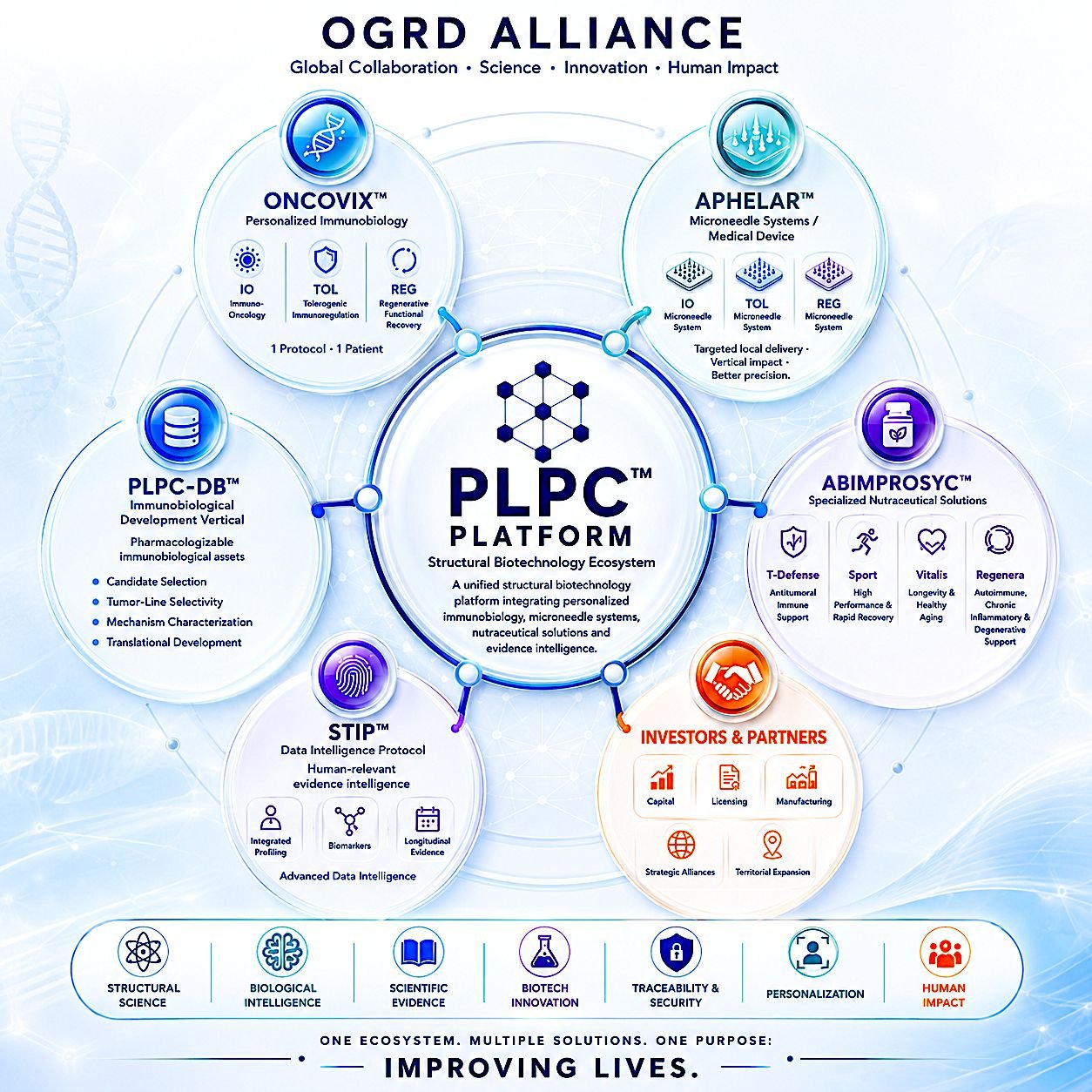
ONCOVIX™-REG incorporates a structural, metabolic, tissue, and microenvironmental biological architecture aimed at organizing the necessary conditions for repair, remodeling, and functional recovery.
An injury may have been treated correctly, yet pain, stiffness, weakness, fibrosis, loss of mobility, or incomplete recovery may persist.
Functional repair depends on much more than symptom control. It involves membranes, cell adhesion, extracellular matrix, mechanical signaling, inflammation, metabolism, microcirculation, proteostasis, and coordination with rehabilitation.
What is ONCOVIX™-REG?
ONCOVIX™-REG is the personalized regenerative and functional recovery vertical of ONCOVIX™.
It is proposed as an individual clinical-biological route that can integrate:
- History review
- Affected tissue identification
- Damage evaluation
- Previous treatments analysis
- Functional assessment
- Imaging review
- Pain & mobility analysis
- Fibrosis or adhesions identification
- Strength & autonomy evaluation
- Personalized regenerative architecture
- Coordination with rehabilitation
- Application planning
- Longitudinal follow-up
- Traceability via STIP™
Beyond the symptom
ONCOVIX™-REG does not start merely by asking where the pain is. It begins by asking which tissue has not completed its repair, what function remains limited, and what biological conditions must be reorganized.
What does a personalized regenerative strategy mean?
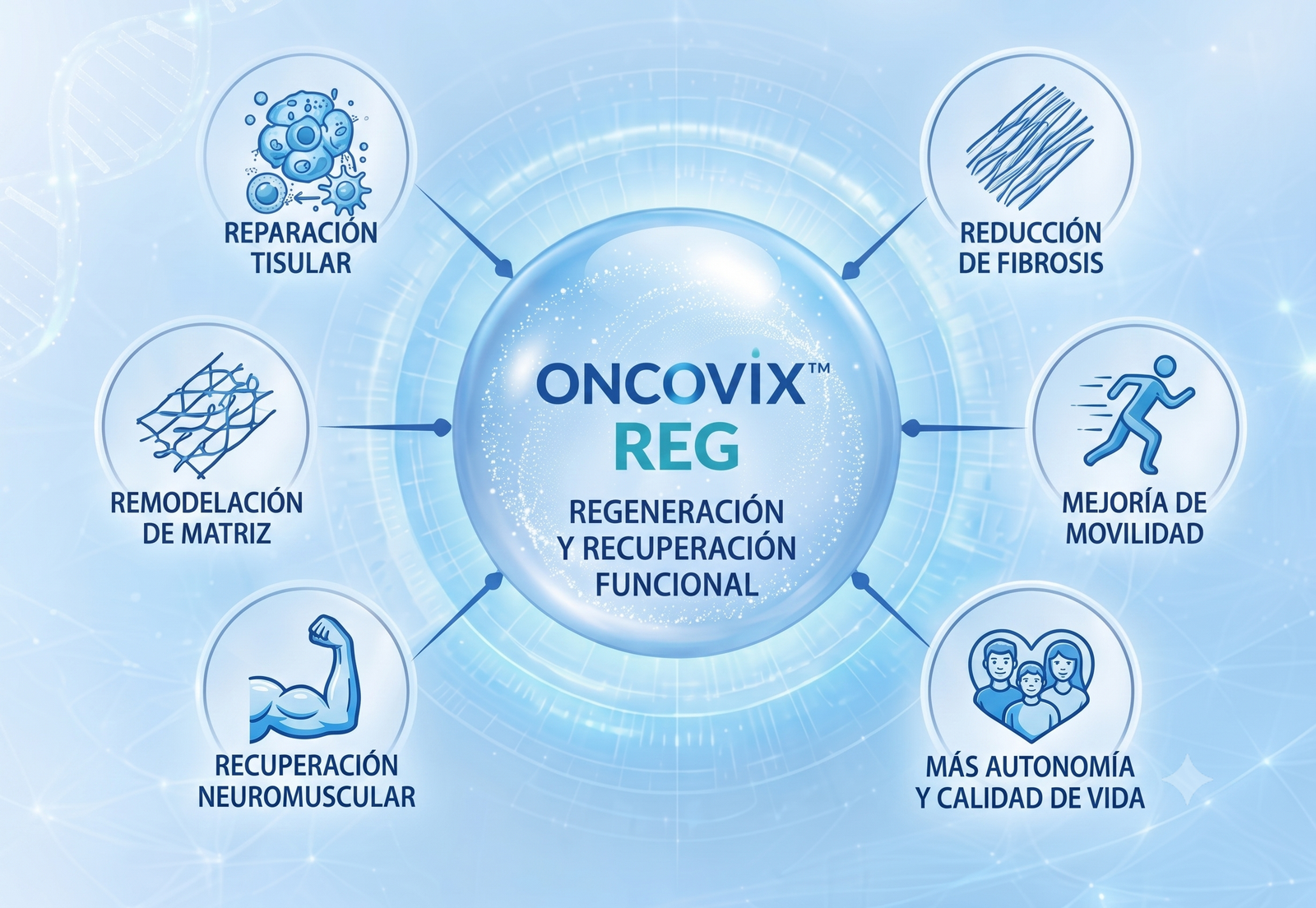
It seeks to understand and organize the necessary conditions so that a tissue can repair, remodel, and recover function.
REPAIR
Promote processes associated with the restoration of damaged tissues.
REMODEL
Organize matrix, adhesion, structure, and tissue adaptation during recovery.
PROTECT
Help reduce persistent factors that hinder repair and function.
RECOVER & TRACK
Integrate biology, mobility, strength, rehabilitation, autonomy, and document evolution.
Regenerating does not just mean intervening at the injured site.
It means integrating tissue, metabolism, microenvironment, movement, and function.
What conditions can consult?
The evaluation is carried out case by case and may consider five major groups.
1. Osteoarticular Degenerative
Knee, hip, hand, and spinal osteoarthritis. Degenerative lower back pain, joint stiffness, progressive loss of mobility.
Frequent profiles: chronic pain, movement limitation, insufficient response to conservative management.
2. Tendons, Cartilage & Soft Tissues
Tendinopathies, rotator cuff injuries, cartilage lesions, meniscal/ligament injuries, fasciopathies, persistent muscle injuries.
Frequent profiles: pain upon movement, loss of strength, slow recovery, repeated infiltrations, incomplete sports return.
3. Post-operative & Post-traumatic
Persistent pain after surgery, post-operative stiffness, weakness, fibrosis, adhesions, disorganized healing, fracture sequelae.
Frequent profiles: prolonged rehab, functional stagnation, persistent pain, difficulty resuming habitual activities.
4. Neurological & Neuropathic
Peripheral neuropathies, sensory alterations, neuropathic pain, residual motor deficit, stroke sequelae, gait/balance alterations.
Frequent profiles: loss of strength, sensory alteration, dependence, incomplete neurological recovery.
5. Sarcopenia, Frailty & Autonomy
Sarcopenia, loss of muscle mass and strength, frailty, fatigue, reduced exercise tolerance, progressive loss of autonomy.
Frequent profiles: progressive weakness, difficulty standing up, slower gait speed, falls, limited rehab response.
Profiles justifying priority evaluation
Priority is determined by integrating pain, time of evolution, functional deterioration, previous treatment, and recovery opportunity.
- Halted or very slow recovery
- Persistent pain or major stiffness
- Fibrosis or adhesions
- Insufficient function post-surgery or trauma
- Progressive loss of strength or mobility
- Gait or balance deterioration
- Increasing functional dependence
- Viable tissue with incomplete repair
- Insufficient response to isolated rehab
- Progressive neuromuscular deterioration
- Sarcopenia and frailty
- Still-usable post-operative window
The Importance of Priority
Priority does not mean interrupting rehabilitation or substituting current treatment. It means avoiding a potentially recoverable limitation from turning into a permanent functional sequela.
Request Priority EvaluationWhat does the evaluation reveal beyond the symptom?
Pain or functional limitation is the visible expression. The ONCOVIX™-REG evaluation seeks to understand which biological processes may be sustaining that condition.
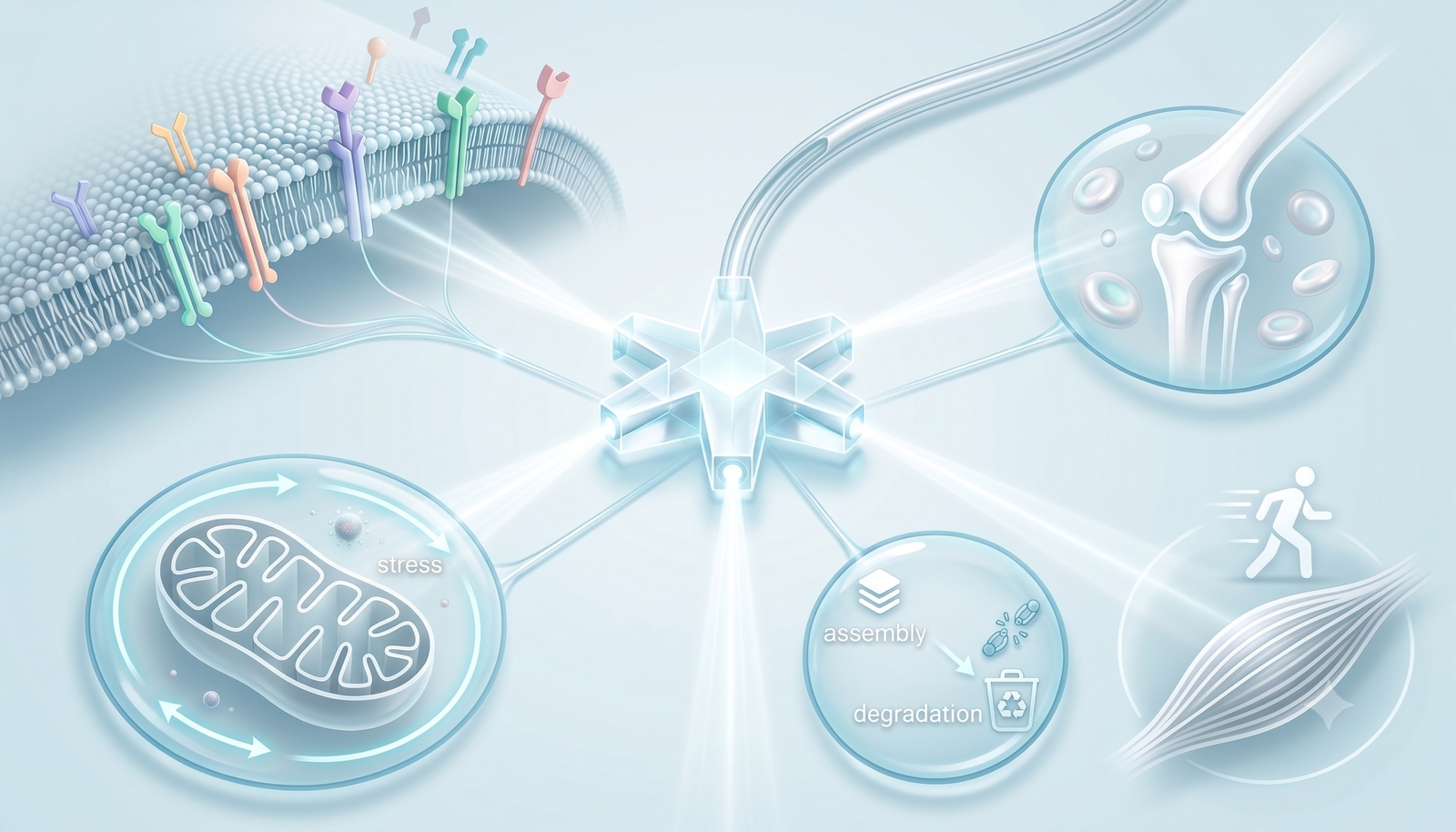
Membranes & Adhesion
Cell function depends on the structural organization of membranes. The bond between cells and matrix influences stability, repair, and force transmission.
Extracellular Matrix & Mechanotransduction
Collagen and elastin support remodeling. Cells interpret pressure and tension; inadequate mechanical signaling can limit recovery.
Inflammation & Fibrosis
Prolonged inflammation maintains pain and matrix degradation. Excessively rigid or disorganized repair (fibrosis) prevents movement.
Metabolism & Microcirculation
Recovery requires cellular energy and stress adaptation. Perfusion and the vascular environment are crucial for nutrition and oxygenation.
Proteostasis & Deconditioning
Stability and removal of damaged proteins affect tissue viability. Prolonged rest or pain reduces strength, mobility, and autonomy.
Functional recovery is the result of the interaction between structure, inflammation, metabolism, circulation, mechanical load, and rehabilitation.
What does conventional treatment provide?
ONCOVIX™-REG recognizes the value of interventions that are already part of the patient's management.
Pain & Inflammation Control
Provides symptomatic relief and improves tolerance to movement and rehabilitation.
Anatomical Correction
Surgery, reduction, or stabilization restore anatomical structure and continuity.
Structure Stabilization
Orthoses, fixations, and procedures protect the tissue during the recovery phase.
Surgical Repair
Re-establishes anatomical relationships and corrects lesions requiring intervention.
Rehabilitation & Physiotherapy
Promote mobility, coordination, balance, and functional recovery.
Strength & Range Recovery
Therapeutic exercise helps regain physical capacity and exertion tolerance.
Conventional treatment provides anatomy, control, stability, and rehabilitation.
ONCOVIX™-REG evaluates how to incorporate a complementary biological dimension of repair, remodeling, and functional continuity.
ONCOVIX™-REG Biological Architecture
The architecture is selected based on the compromised tissue, cause, time of evolution, and functional objectives. ONCOVIX™-REG incorporates a complementary regenerative dimension within a personalized, functional, and traceable route.
1. Membranes & Microdomains
Organization of receptors, signals, and cellular surfaces relevant to communication and repair.
2. Integrins & Adhesion
Involvement of axes like αvβ3 and α5β1 in cell-matrix binding and mechanical load transmission.
3. Extracellular Matrix
Organization of collagen, elastin, and proteoglycans as support for repair and force transmission.
4. Mechanotransduction
Conversion of mechanical stimuli into cellular responses via YAP/TAZ, integrins, and cytoskeleton.
5. PI3K–AKT–mTOR
Axes related to cell survival, protein synthesis, metabolism, and adaptation.
6. MAPK–ERK & TGF-β–SMAD
Signaling, proliferation, tissue reorganization, matrix synthesis, and fibrosis control.
7. NF-κB, NLRP3 & MMP/TIMP
Linked to persistent inflammation, damage response, and matrix degradation/repair balance.
8. Metabolism & Microcirculation
Energy production, stress adaptation, perfusion, endothelium, and vascular support.
9. Proteostasis & STIP™
Protein stability (HSP70/90) and longitudinal recording of applications, biomarkers, rehab, and function.
How is a case evaluated?
Integration with rehabilitation and treatments
Multidisciplinary Coordination
Coordination may involve Traumatology, Neurology, Physiatry, Surgery, Rheumatology, Geriatrics, Internal Medicine, Kinesiology, Occupational Therapy, Rehabilitation, Pain Management, Nutrition, and the ONCOVIX™ Science Liaison Team.
The highest possibility of recovery is sought when the biological architecture is integrated with movement, progressive load, physiotherapy, and rehabilitation.
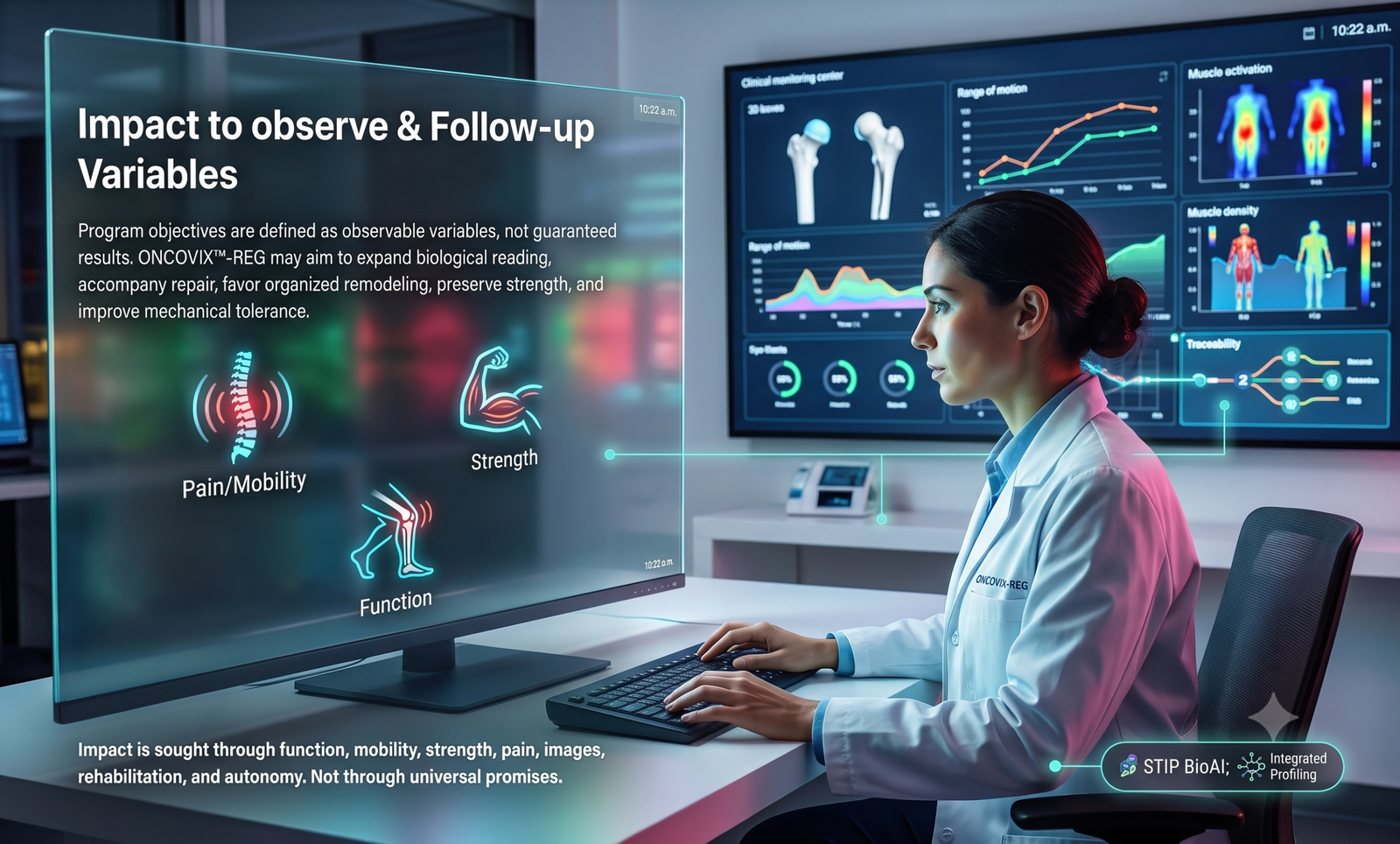
Impact to observe & Follow-up Variables
Program objectives are defined as observable variables, not guaranteed results. ONCOVIX™-REG may aim to expand biological reading, accompany repair, favor organized remodeling, preserve strength, and improve mechanical tolerance.
Follow-up may include:
- Pain: VAS, resting, movement, nocturnal.
- Mobility: ROM, flexion, extension, stiffness.
- Strength: Muscle force, grip, load capacity, endurance.
- Gait & Balance: Speed, stability, fall risk.
- Function: ADLs, work/sports return, autonomy.
- Imaging: X-ray, US, MRI, CT structural evolution.
- Rehab: Sessions, adherence, progression, tolerance.
- Quality of Life & STIP™: Sleep, fatigue, traceability.
Impact is sought through function, mobility, strength, pain, images, rehabilitation, and autonomy. Not through universal promises.
Evaluation and Admission Routes
Differentiated experience for patients/families and physicians/professionals.
Patients & Families
Essential Documents: Diagnosis, clinical summary, evolution time, current symptoms, treatments, rehab status.
Recommended: Surgical reports, X-rays/MRI, physiatry/kinesiology reports, pain scales, medications.
Physicians & Professionals
Request clinical review, tissue damage analysis, fibrosis evaluation, integration with surgery/rehab, objective definition, or institutional report.
Frequently Asked Questions
What does REG mean?
Is ONCOVIX™-REG the same as rehabilitation?
Do all patients with pain qualify?
Can it be evaluated after surgery?
Can it be integrated with physiotherapy?
Can an old injury be evaluated?
Are imaging tests required?
Can it be requested from another country?
What does it mean to qualify?
ONCOVIX™-REG
HIGH-END PERSONALIZED REGENERATIVE & FUNCTIONAL RECOVERY
When an injury, surgery, or degenerative process leaves pain, stiffness, weakness, or functional loss, the evaluation must integrate much more than the symptom.
It must understand:
- Which tissue remains compromised?
- What function remains limited?
- What treatments have already been performed?
- What recovery capacity does the patient retain?
- What factors may be hindering repair?
- What regenerative architecture can be incorporated?
- How to integrate movement, rehabilitation, and follow-up?
1 protocol · 1 patient
ONCOVIX™-REG incorporates an architecture of membranes, adhesion, extracellular matrix, mechanotransduction, metabolism, redox, microcirculation, proteostasis, and functional remodeling.

Scope Notice: The information presented is institutional, informative, and orientational in nature. The ONCOVIX™-REG evaluation is carried out on a case-by-case basis and is integrated with individual medical care, prescribed treatments, surgery, rehabilitation, and functional follow-up. Programmatic qualification does not constitute a guarantee of pain elimination, complete regeneration, anatomical recovery, return to sports, functional independence, or any predetermined clinical outcome.