
PERSONALIZED IMMUNO-ONCOLOGY
When cancer persists, recurs, progresses, or requires immunobiological continuity.
1 PROTOCOL · 1 PATIENT
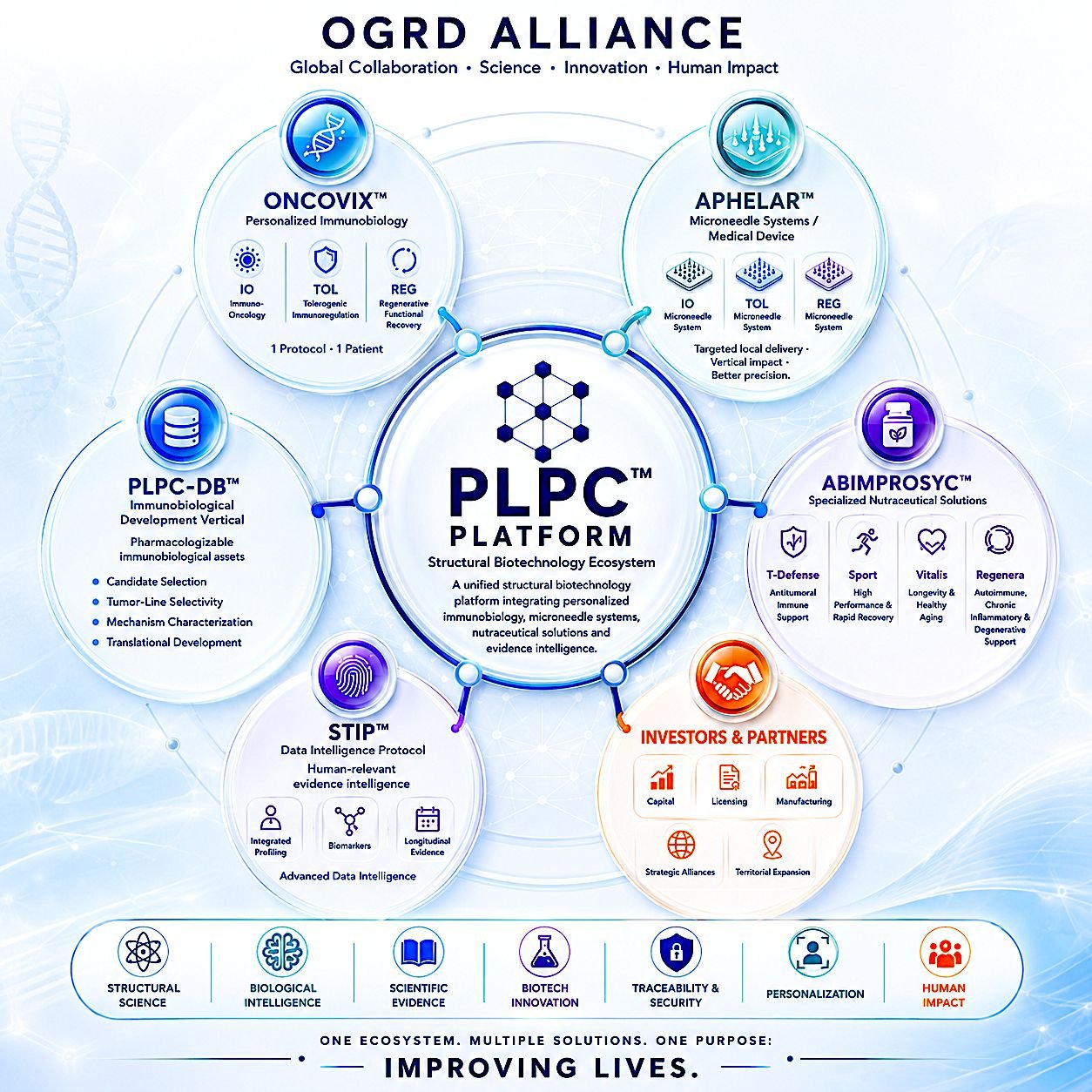
ONCOVIX™-IO integrates a structural, multi-component, multi-antigenic, metabolic, and longitudinal immunobiological architecture designed based on the disease, evolution, treatments, and real clinical situation of each patient.
The question is not only what cancer the patient presents. The decisive question is what biology remains active, which mechanisms explain its evolution, and what dimension is still missing to be incorporated.
What is ONCOVIX™-IO?
ONCOVIX™-IO is the personalized immuno-oncology vertical of ONCOVIX™. Its purpose is to analyze and integrate, for each patient:
- Histological diagnosis
- Stage and extension
- Clinical trajectory
- Previous treatments
- Pathology & Imaging
- Biomarkers
- Molecular profile
- Immunological status
- Metabolism & Organic reserve
- Functional status
- Current treatment
- Longitudinal follow-up
What patients can consult?
ONCOVIX™-IO can evaluate patients with different types and trajectories of cancer.
1. High-Frequency Solid Tumors
Lung, Colorectal, Breast, Prostate, Ovarian, Melanoma, Renal cancer.
Profiles: progression, recurrence, partial response, residual disease.
2. Digestive & Hepatobiliary
Gastric, Esophageal, Pancreatic, Hepatocellular carcinoma, Biliary tract, Advanced digestive tumors.
Profiles: locally advanced, metastasis, insufficient response.
3. High-Complexity Tumors
Glioblastoma, Brain tumors, Sarcomas, Mesothelioma, Progressive neuroendocrine, Rare tumors.
Profiles: aggressive behavior, early relapse, resistance.
4. Persistent & Metastatic
Visible residual disease, microscopic residue, local/regional recurrence, metastatic disease.
Defined by trajectory, heterogeneity, and longitudinal evolution.
5. Hematological Malignancies
Leukemias, Lymphomas, Multiple myeloma, Myelodysplastic syndromes.
Profiles: residual disease, post-transplant relapse.
What does the evaluation reveal beyond the diagnosis?
The diagnosis identifies the disease. The ONCOVIX™-IO evaluation seeks to understand how that disease is functioning in the current patient.
Tumor Heterogeneity
The same cancer can contain cellular subpopulations with different characteristics and sensitivities.
Selective Pressure
Previous treatments may control sensitive populations and favor the persistence of populations with greater adaptive capacity.
Acquired Resistance
The absence of response or progressive loss of sensitivity may reflect more than one active biological mechanism.
Mixed Progression
Visible reduction does not always mean elimination. Some lesions may respond while others continue to grow.
Tumor Microenvironment
The tumor interacts with immune cells and stroma. Presenting tumor signals is crucial for an effective response.
Functional Reserve
The general state, organic function, and nutritional status influence the opportunity and form of integration.
"Cancer must be read as a dynamic network of heterogeneity, adaptation, signaling, immunological interaction, and longitudinal evolution."
What does current oncological treatment provide?
ONCOVIX™-IO recognizes the value and function of each component of the oncological strategy.
Surgery
Provides resection, tumor volume reduction, locoregional control, and diagnostic material.
Radiotherapy
Provides localized control, targeted tumor damage, and immunological integration opportunities.
Chemotherapy
Provides systemic control, tumor burden reduction, and sensitivity for certain cell populations.
Targeted Therapy
Intervenes on selected molecular targets when a clinically relevant target exists.
Hormone Therapy
Modulates hormonal stimuli involved in the proliferation of certain tumors.
Pharmacological Immunotherapy
Intervenes on checkpoints or other mechanisms of immune regulation.
The multimodal strategy does not compete between treatments. It integrates different functions to respond to a biologically complex disease.
How is a case evaluated?
A structured process designed specifically for each patient.
Identification
Patient, diagnosis, institution & documentation.
Diagnosis Review
Pathology, location, stage, and features.
Trajectory
Chronological order of treatments & responses.
Imaging & Biomarkers
Extension, patterns, and molecular profile.
Therapeutic Gap
Identify what dimension remains pending.
Integration Plan
Define ONCOVIX integration with current treatment.
Integration with current treatment
ONCOVIX™-IO integrates in a complementary, coordinated, and longitudinal manner, preserving the continuity of indications established by the treating team.
Multidisciplinary Coordination
Coordination may include the treating oncologist, hematologist, radiation oncologist, surgeon, pathologist, molecular laboratory, imaging team, nutrition, rehabilitation, symptom management, and the ONCOVIX™ Science Liaison Team.
Integration with Radiotherapy
Radiotherapy can create a relevant biological opportunity. The sequence may comprise: Radiotherapy > Antigen release > Damage signals > Capture > Presentation > T and NK activation > Follow-up.
Precision Follow-up (STIP™)
Evolution must be interpreted by integrating disease, function, tolerance, treatment, and time. Program objectives are defined as observable variables, not guaranteed outcomes.
Clinical Evolution
Imaging, tumor burden, biomarkers.
Organic Function
Liver, kidney, weight, nutrition.
Quality of Life
Pain, fatigue, sleep, ECOG/PS.
Traceability
Tolerance, toxicity, STIP™ registry.
Evaluation and Admission Routes
Differentiated experience for patients/families and physicians/professionals.
Patients & Families
Essential Documents to Send: Biopsy report, diagnosis, clinical summary, recent imaging, treatments received, current treatment.
Physicians & Professionals
Request clinical review, gap analysis, radiotherapy/systemic integration, follow-up variables definition, or an institutional case report.
YOUR CASE IS UNIQUE.
YOUR TREATMENT SHOULD BE TOO.
Request your clinical-molecular and immuno-oncological evaluation today.
Scientific focus
and real evidence
Personalized program
1 protocol · 1 patient
Confidentiality
and traceability
Coordinated international
attention
Institutional and Clinical Scope: ONCOVIX™-IO is part of ONCOVIX™ within the PLPC™ Platform. Information for patients and professionals. It does not replace medical evaluation or the indications of the treating physician. Programmatic qualification does not constitute a guarantee of remission, tumor reduction, increased survival, cure, or any predetermined clinical outcome.